

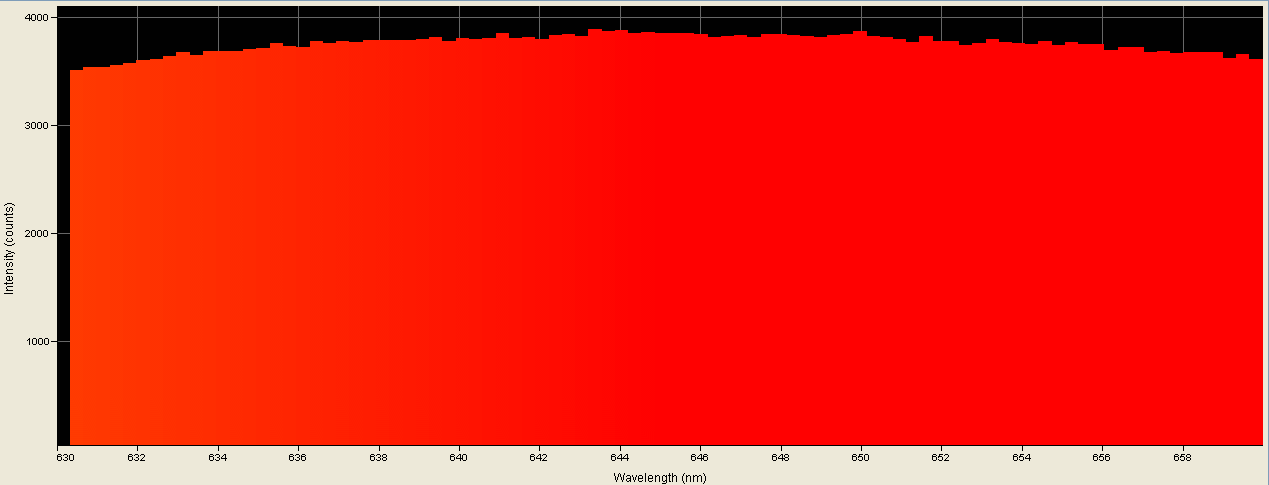
Spectrographic analysis of the red LEDs in the 50xLED Battery Operated Sound Synch Wire Lights; spectrometer's response narrowed to a band between 630nm and 660nm to pinpoint the peak phosphor emission wavelength, which is 643.890nm.
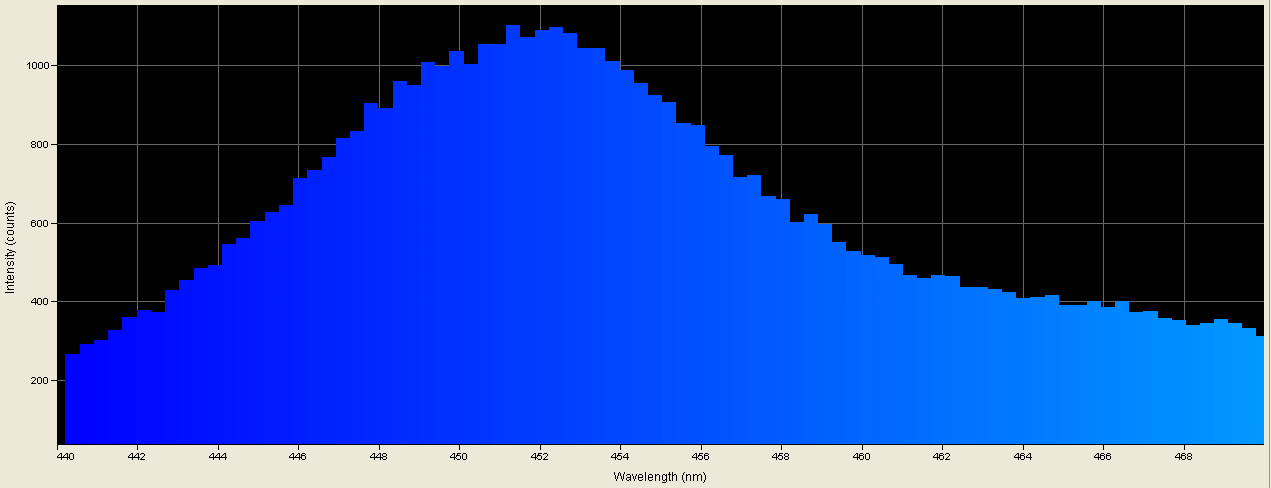
Spectrographic analysis of the red LEDs in the 50xLED Battery Operated Sound Synch Wire Lights; spectrometer's response narrowed to a band between 440nm and 470nm to pinpoint the peak native emission wavelength, which is 451.180nm.
The raw spectrometer data (tab-delimited that can be loaded into Excel) is at 50ssr.txt

Spectrographic analysis of the phosphor red LEDs in the 200x Multicolor LED Battery-Operated Timer Lights; spectrometer's response narrowed to a band between 620nm and 640nm to pinpoint the peak phosphor emission wavelength, which is 633.650nm.

Spectrographic analysis of the phosphor red LEDs in the 200x Multicolor LED Battery-Operated Timer Lights; spectrometer's response narrowed to a band between 440nm and 470nm to pinpoint the peak native emission wavelength, which is 454.700nm.
The raw spectrometer data (tab-delimited that can be loaded into Excel) is at 200fesr.txt
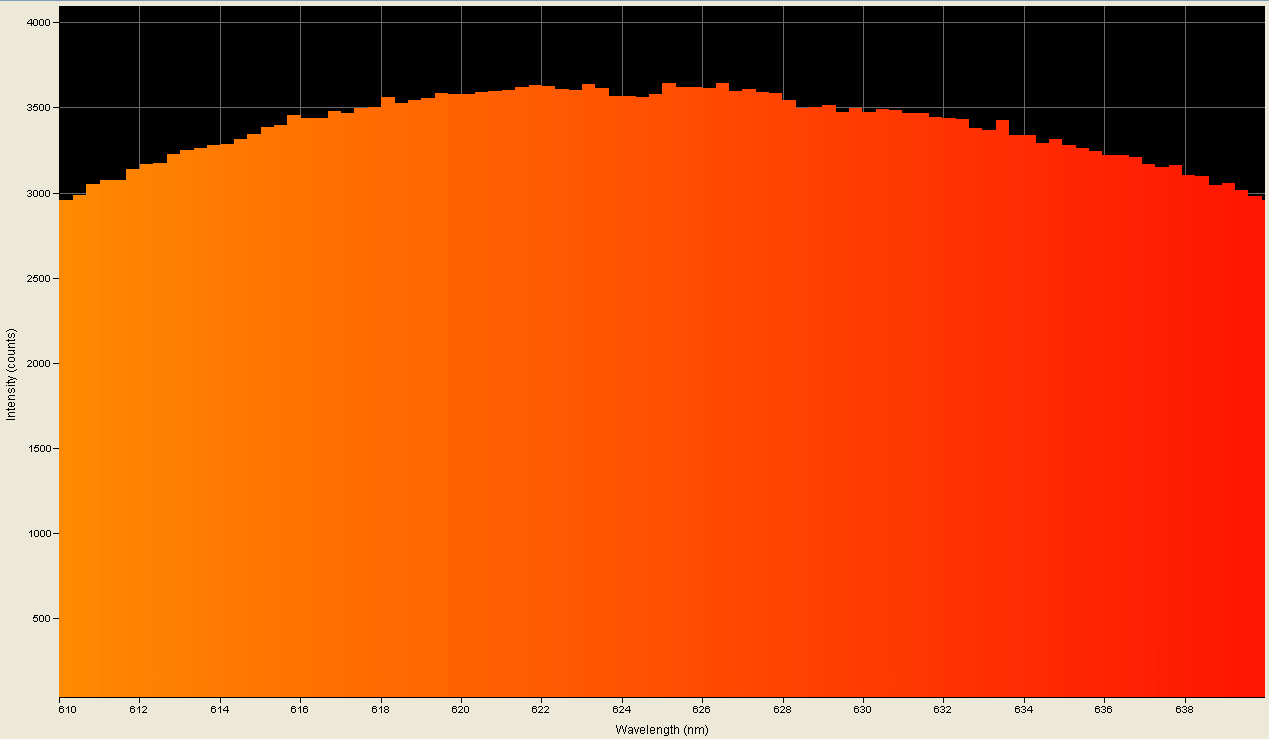
Spectrographic analysis of the phosphor red LEDs in the 3-Function 18-LED Ultra-Slim Wire Light Set; spectrometer's response narrowed to a band between 610nm and 640nm to pinpoint the phosphor's peak emission wavelength, which is 626.020nm.
The raw spectrometer data (tab-delimited that can be loaded into Excel) is at 3fus-r.txt

Spectrographic analysis of the LEDs in the 20 LED Micro 8-Function Phosphor Red Halloween Lights; spectrometer's response narrowed to a band between 580nm and 630nm to pinpoint the phosphor's peak emission wavelength, which is 651.470nm.
The raw spectrometer data (tab-delimited that can be loaded into Excel) is at 20hallr.txt

Spectrographic analysis of the LEDs in the 20 LED Micro 8-Function Phosphor Red Halloween Lights; spectrometer's input deliberately overloaded to show the weak blue emission.
This (plus an examination of the LED's die area and the unexpectedly broadband emission) leads me to believe that these LEDs are actually PHOSPHOR RED LEDs!!!
The native emission peaks at 447.650nm.
The raw spectrometer data (tab-delimited that can be loaded into Excel) is at 20hallrn.txt
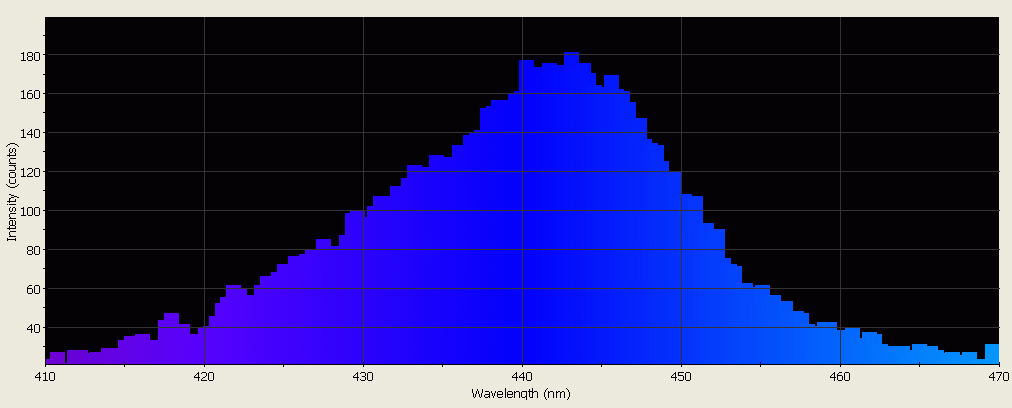
Repeat spectrographic analysis of the red LEDs in the LED Battery-Operated Christmas Lights; spectrometer's input greatly overloaded (even more so than the last two analyses) in an attempt to find a blue, blue-green, or green pump wavelength because an expert in LEDs who's work I implicitely trust speculates that this may in fact be a phosphor red LED! Spectrometer's response narrowed to a band between 410nm and 470nm to pinpoint native emission peak wavelength, which is 442.700nm; this confirms without a doubt that these are those wily and elusive phosphor red LEDs!
The raw spectrometer data (tab-delimited that can be loaded into Excel) is at /45/x21-r3.txt.
This data file has been limited to a spectral response from 410nm to 470nm.
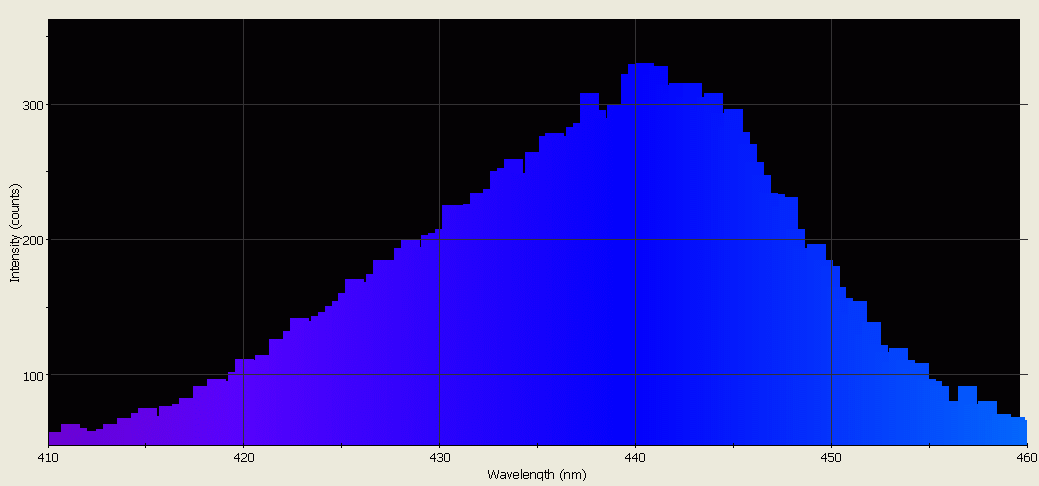
Repeat spectrographic analysis of the red LEDs in the LED Battery-Operated Christmas Lights; spectrometer's input greatly overloaded (even more so than the last analysis) in an attempt to find a blue, blue-green, or green pump wavelength because an expert in LEDs who's work I implicitely trust speculates that this may in fact be a phosphor red LED! Spectrometer's response narrowed to a band between 410nm and 460nm to pinpoint native emission peak wavelength, which is 440.220nm.
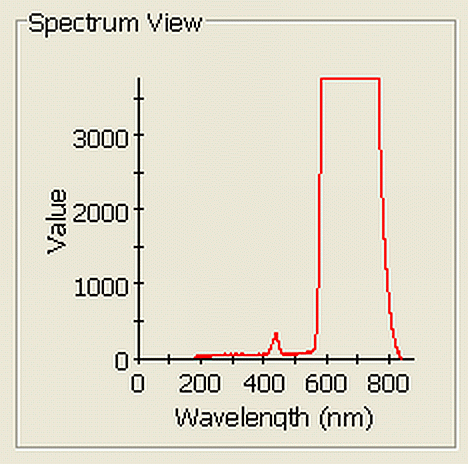
Note the spike at ~440nm; this pretty much discounts spectrometer noise.
The raw spectrometer data (tab-delimited that can be loaded into Excel) is at /44/x21-r2.txt.
This data file has been limited to a spectral response from 400nm to 460nm.
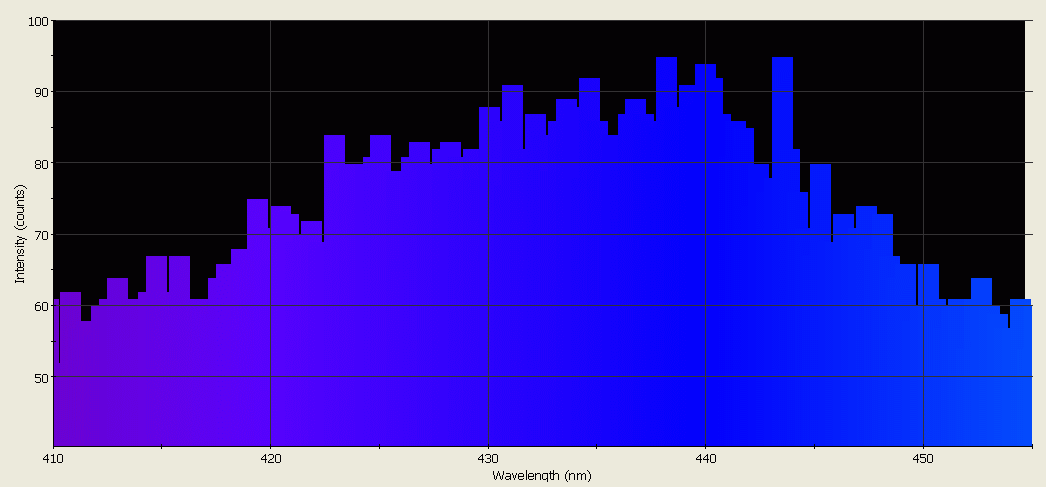
Spectrographic analysis of the red LEDs in the LED Battery-Operated Christmas Lights; spectrometer's input greatly overloaded in an attempt to find a blue, blue-green, or green pump wavelength because an expert in LEDs who's work I implicitely trust speculates that this may in fact be a phosphor red LED! Spectrometer's response narrowed to a band between 410nm and 455nm to pinpoint native emission peak wavelength, which is 443.050nm.
The raw spectrometer data (tab-delimited that can be loaded into Excel) is at /44/x21-r.txt.
This data file has been limited to a spectral response from 400nm to 455nm.